Vulcanized Fiber Sheet for Electrical Insulation Explained
When buyers search for vulcanized fiber sheet, they are usually trying to answer a practical question:
Is this the right material for electrical insulation parts, and how does it relate to fish paper?
This is an important question, because in real market use, the two terms are closely related but not identical.
A simple way to understand it is this:
Vulcanized fiber is the broader material family. Fish paper is a specific, electrical-grade type of vulcanized fiber.
That distinction matters for both purchasing and application. A buyer may search for vulcanized fiber sheet, while the actual product they need for electrical insulation is often sold or discussed as electrical fish paper.
1. What Is Vulcanized Fiber Sheet?
Vulcanized fiber sheet is a dense cellulose-based material made from paper fibers that are chemically processed into a tough, durable sheet.
It is known for combining:
good mechanical strength
electrical insulation
light weight
easy fabrication into finished parts
Compared with ordinary paperboard, vulcanized fiber is much tougher and more suitable for industrial and electrical use.
In practical manufacturing, it is often selected for parts that need to be:
cut
punched
formed
used as insulating barriers or washers
So when people talk about vulcanized fiber sheet in electrical work, they are usually not talking about ordinary sheet material. They are talking about a fabricable insulation material with real workshop value.
How Electrical Fish Paper Fits Into This Category
This is the key point many buyers want clarified.
Electrical fish paper is not a separate unrelated material. It is a specific electrical-grade type of vulcanized fiber.
That means:
vulcanized fiber = the broader material family
fish paper = one commonly used electrical-insulation grade within that family
In electrical applications, fish paper is often the name buyers know first, especially in motor, transformer and general insulation work.
For product details and supply options, you can see our electrical fish paper page.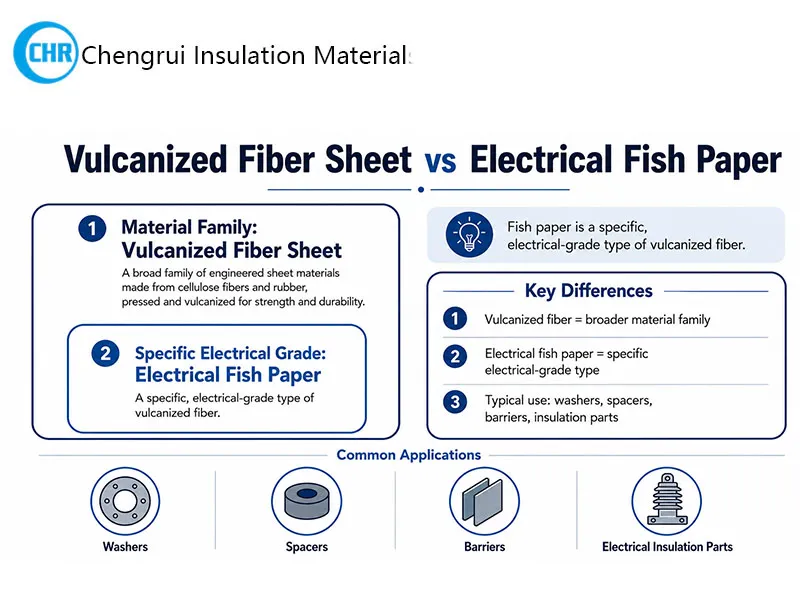
Why Transformer and Motor Buyers Use It
From a buyer's perspective, the key question is not the name.
The key question is what the material can do in actual production.
Electrical-grade vulcanized fiber, including fish paper, is often selected because it offers a useful balance of:
electrical insulation
mechanical support
machining convenience
cost control
That makes it practical for:
insulating washers
spacers
separators
slot insulation pieces
local insulation parts
fabricated electrical components
This is one reason the material remains widely used. It is not only an insulation material. It is also a workshop-friendly material.
Where Vulcanized Fiber Sheet Is Commonly Used
1. Electrical Insulation Parts
This is the most common use. Vulcanized fiber sheet is often converted into washers, barriers, separators and shaped electrical parts.
2. Motors and Electrical Equipment
In motors and general electrical assemblies, the material may be used where a rigid or semi-rigid cellulose insulation part is needed.
3.Transformers and Coils
In some transformer and coil-related insulation parts, electrical-grade vulcanized fiber is used for local insulating components.
4.Fabricated Components
Many buyers prefer vulcanized fiber sheet because it can be cut, punched and converted efficiently into repeat parts.
Vulcanized Fiber Sheet vs Flexible Composite Insulation Paper
This is where buyers need to be careful.
Vulcanized fiber sheet and flexible composite insulation paper are not the same thing.
Vulcanized Fiber Sheet / Fish Paper
more suitable for fabricated parts
commonly used where mechanical form matters
Flexible Composite Insulation Paper
often used for slot liners, phase insulation and wrapping-type insulation
better suited where bending and insertion are important
So if the application needs a formed insulating part, vulcanized fiber sheet may be the right choice.
Common thickness:
0.25 mm to 1.0 mm: Used for thin insulation layers and electronic spacers
1.5 mm to 3.0 mm: Standard for gaskets, washers, and mechanical shims
3.5 mm to 10.0 mm+: Used for structural supports and heavy-duty spacers
What Buyers Should Check Before Ordering
A buyer should not order vulcanized fiber sheet based only on name and price.
The more useful questions are:
1. Is the required material general vulcanized fiber, or electrical fish paper?
This is the first distinction to make.
2. What is the actual application?
Is it for washers, barriers, slot pieces, separators or another fabricated insulation part?
3. Does color matter?
If the application follows a familiar electrical-insulation standard in the workshop, the customer may specifically expect slate grey or dark blue fish paper.
4. What thickness and sheet size are needed?
The right thickness affects both fabrication and insulation build.
5. Is the material mainly for electrical insulation, mechanical function, or both?
This changes what grade is actually suitable.
Common Purchasing Mistakes
Mistake 1: Assuming all vulcanized fiber sheet is the same
It is not. Fish paper is a specific electrical-grade type within the broader vulcanized fiber category.
Mistake 2: Ignoring the difference between general sheet material and electrical insulation grade
This can lead to the wrong material being selected for the job.
Mistake 3: Looking only at color
Color is useful for identification, but it is not the main technical specification.
Mistake 4: Choosing only by price
If the sheet does not match the real application, lower price will not save cost in production.
Mistake 5: Not confirming whether the application needs a rigid sheet or a flexible insulation material
This is one of the easiest ways to choose the wrong material family.
FAQ
Q1: Is fish paper the same as vulcanized fiber sheet?
A: Not exactly. Fish paper is a specific, electrical-grade type of vulcanized fiber. Vulcanized fiber is the broader material family.
Q2: Why do buyers search for vulcanized fiber sheet when they actually need fish paper?
A: Because the two are closely related, and many buyers know one term better than the other depending on their market or industry background.
Q3:What color is fish paper usually?
A: Fish paper is most commonly seen in slate grey or dark blue, while vulcanized fiber more broadly can also be found in red, black and grey.
Q4:Is vulcanized fiber sheet suitable for electrical insulation?
A: Yes. Electrical-grade vulcanized fiber, including fish paper, is widely used for fabricated electrical insulation parts.
For electrical insulation buyers, the most practical way to understand this material is simple:
vulcanized fiber is the broader material family
fish paper is a specific electrical-grade type within that family
That is why the two terms are closely connected in the market, but should not be treated as completely identical in every context.
If your application is electrical insulation, especially for fabricated parts, there is a good chance that what you really need is not just any vulcanized fiber sheet, but electrical fish paper.
For specifications and supply options, you can view our electrical fish paper product page.
If you are looking for vulcanized fiber sheet for electrical insulation, and want to confirm whether electrical fish paper is the right grade for your application, contact us for thickness options, sheet sizes and quotation support.


Quick Quote