Transformer Pressboard RFQ: What to Include
A transformer pressboard RFQ should identify the approved material grade, application, supply form, thickness and tolerance, sheet or part dimensions, drawing revision, quantity, inspection requirements and delivery destination. These details let a supplier quote the material and processing that your production team actually needs.
Transformer pressboard is a cellulose-based electrical insulation material used in oil-filled transformers. Buying it as a sheet and buying a finished insulation component are different sourcing tasks. This checklist helps purchasing and engineering agree on the requirement before requesting prices.
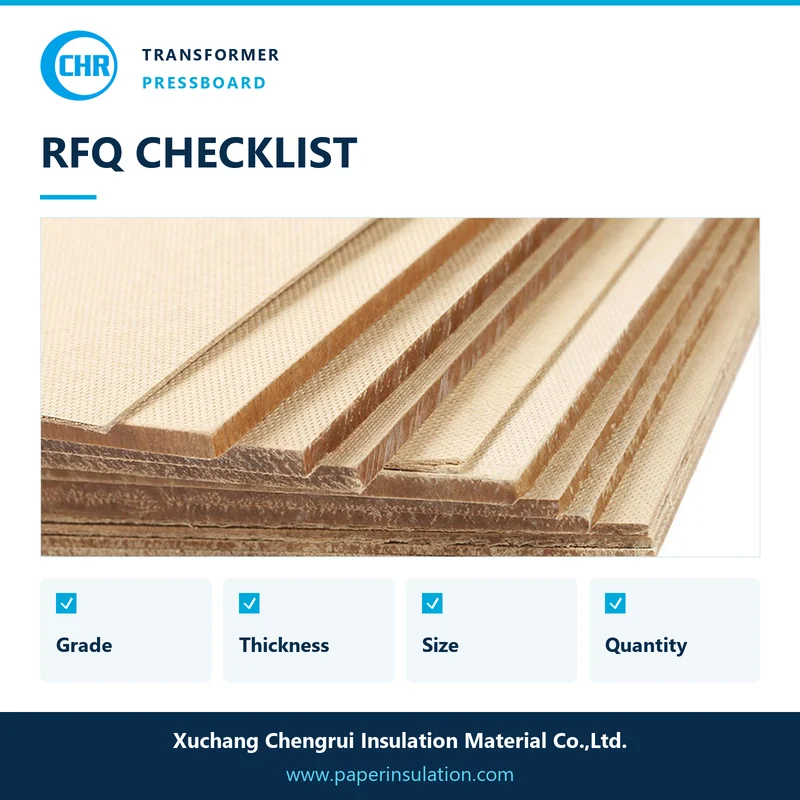
Transformer insulation pressboard sheets. Select the image to review the product range.
What should a transformer pressboard RFQ contain?
An RFQ means a request for quotation. For pressboard, a product name alone does not define the full requirement. Use the following checklist when preparing an inquiry or comparing supplier quotations.
| Item | Information to send | What to confirm in the quotation |
|---|---|---|
| Application | Transformer type and the part's intended function | The supplier understands the intended use |
| Material grade | Approved designation and material specification revision | Exact grade offered and any proposed deviation |
| Supply form | Full sheets, cut blanks, strips or finished components | Processing included in the price |
| Thickness | Nominal value, tolerance and inspection condition | Measurement basis and agreed acceptance limits |
| Dimensions | Sheet size or fully dimensioned component drawing | Finished dimensions and dimensional tolerances |
| Drawing control | Part number, revision, units and quantity per drawing | The same revision is used for quoting and production |
| Quality evidence | Required tests, documents and sample approval | Available evidence and what will accompany the shipment |
| Order quantity | Quantity and unit for each size or part number | Price unit, minimum order and packing quantity |
| Delivery | Destination and requested delivery date | Lead time, packing and agreed delivery terms |
Define the material separately from the component
Start with the approved insulation design. State the required grade and the document that defines it. If a supplier uses a different trade designation, request a written comparison for engineering review before accepting it as equivalent.
Then describe the component's function: for example, a barrier, spacer or structural insulation part. Function provides context, but it does not replace a material specification or drawing. Avoid asking the supplier to select a board solely from the transformer's voltage rating.
Chengrui's electrical insulation pressboard range includes different thicknesses and formats. Confirm the actual grade, size and processing offered for your inquiry rather than treating every catalogue option as interchangeable.
Choose full sheets, cut blanks or finished parts
Tell the supplier how much work should be completed before delivery. A sheet price and a finished-component price cannot be compared without checking the work included.
| Supply form | Buyer should provide | Clarify before ordering |
|---|---|---|
| Full sheets | Grade, thickness, sheet dimensions and sheet count or weight | Actual sheet format, packing and price unit |
| Cut blanks or strips | Finished blank dimensions, tolerances and quantities | Cutting allowance, edge requirements and identification |
| Finished components | Controlled drawing, material specification and part quantities | Included machining, inspection and sample approval |
For pressboard strips for oil ducts, include thickness, width and length rather than a single general size. For shaped parts, show the complete geometry and identify the dimensions that matter for assembly.
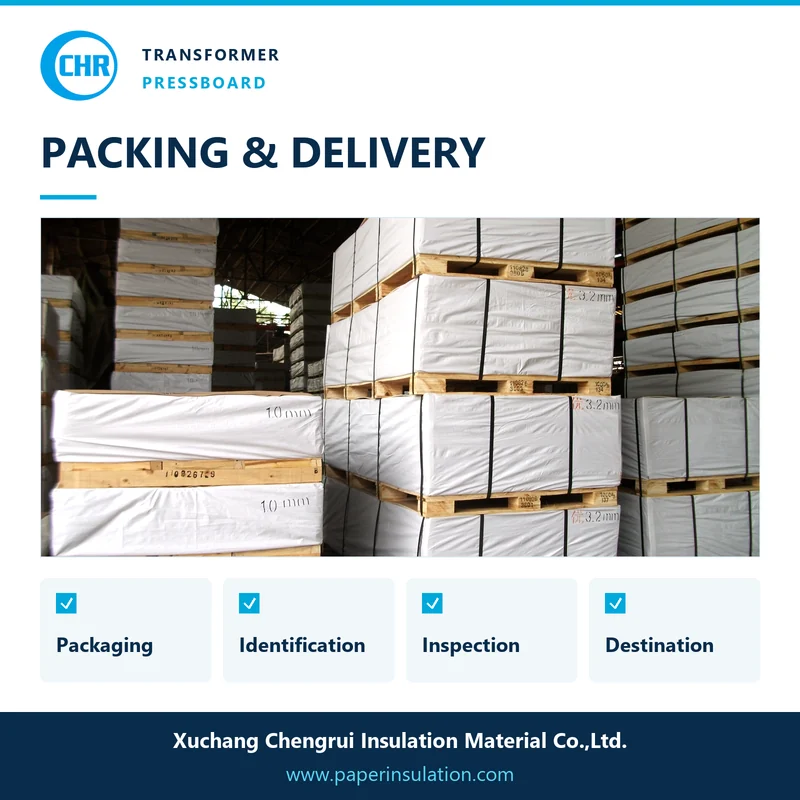
Pressboard packing and delivery checklist: agree packaging, identification, inspection and destination before ordering.
Check the drawing before sending it for quotation
A useful drawing allows the supplier to identify the part without guessing. Review these details with engineering:
Document identity: part number, drawing revision, date and units.
Geometry: overall dimensions, holes, slots, radii and any formed features.
Tolerances: dimensions and datum references needed for inspection and assembly.
Material: grade, thickness and the referenced material specification.
Finishing: edge condition, surface requirements and permitted processing marks where relevant.
Quantity: number of pieces for each drawing and whether samples are required first.
If a drawing changes during the quotation process, issue the new revision explicitly and request an updated quotation. Record any agreed exception on the approved documents so purchasing and production use the same requirement.
Agree on inspection, documents and packaging
Ask your quality team which checks are needed for material approval and incoming inspection. Where test results are required, name the property, test method, specimen condition and acceptance limit. A test value without its measurement basis may not answer the question your design team is asking.
Confirm which documents the supplier can provide for the offered grade and batch. These may include an agreed technical data sheet, inspection record, certificate of conformity or material identification. State the required evidence in the order instead of assuming it will be included.
Also describe the shipping destination and receiving needs. Ask how sheets or finished parts will be protected and identified, and request the applicable storage and handling instructions. Define who reviews damaged packaging, missing labels or dimensional discrepancies before the material enters production.
A pressboard inquiry template you can adapt
Please quote transformer insulation pressboard for our approved application.
Application and material: [transformer type and part function]; [approved grade and specification revision].
Supply form and dimensions: [full sheets, cut blanks or finished parts]; [thickness and tolerance]; [sheet dimensions or drawing number and revision].
Quantity: [quantity and unit for each size or part number]; [sample quantity, if required].
Quality requirements: [agreed inspection criteria, required documents and approval process].
Delivery: [destination and requested date]. Please identify any deviation from our requirements and confirm the price unit, packing, lead time and delivery terms.
The bracketed fields are a template for your project information. They are not a product specification or a quotation.
Frequently asked questions
Can I request a quote with only thickness and quantity?
Those details are a starting point. Add the material grade, supply form, dimensions and intended application. For fabricated parts, provide the drawing revision and quantity for each part number.
Can transformer voltage alone determine pressboard thickness?
Use the approved insulation design to define thickness and grade. Voltage alone does not describe the part's geometry, mechanical role or the rest of the insulation system.
Should I buy sheets or finished pressboard components?
Choose according to your production capability and the processing you want included. Compare quotations on the same supply form, dimensional requirements and inspection scope.
What should I check before a repeat order?
Confirm the approved grade, drawing revision, dimensions, quantity and required documents. Identify any changes since the previous order and obtain the necessary technical approval before release.
Send Chengrui your pressboard requirements
Review the transformer pressboard product information, then contact Chengrui with your material specification, dimensions, drawings and quantity. A clearly defined RFQ helps the supplier identify missing details and quote the required supply form.


Quick Quote