Diamond Dotted Paper: 8 Checks Before Ordering
When buying diamond dotted paper (DDP) for transformer windings, confirm eight items before ordering: the approved material grade, thickness and tolerance, resin coating, curing requirements, roll dimensions, handling requirements, batch evidence and trial acceptance criteria. A clear specification lets purchasing, production and quality teams evaluate the same material.
This guide is for buyers and engineers sourcing DDP insulation paper for oil-immersed transformer layer insulation. It provides an ordering checklist; final material selection must follow the transformer design and the approved manufacturing process.
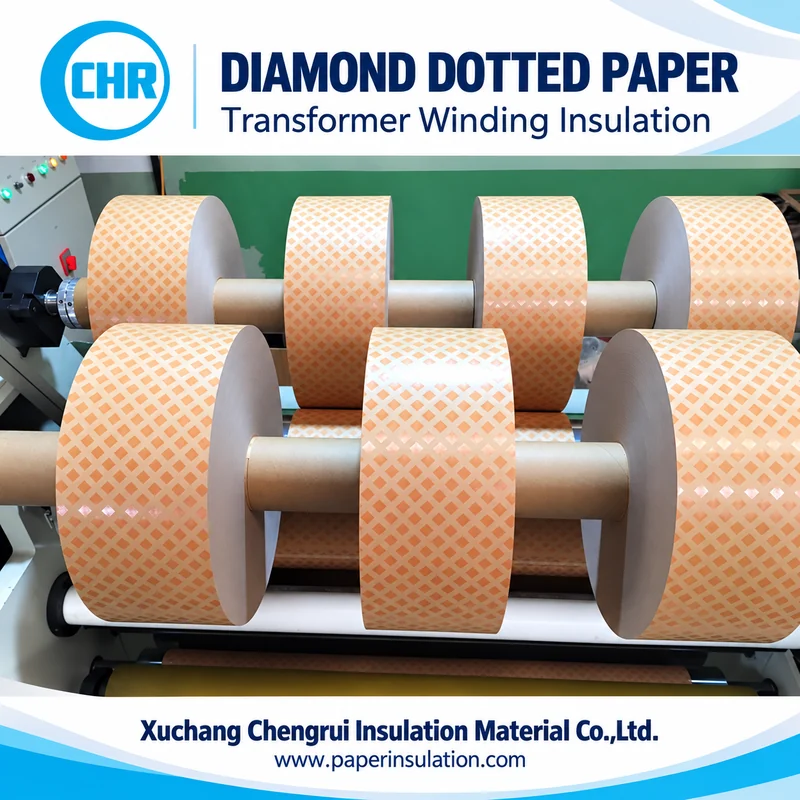
Diamond dotted paper slit rolls. Select the image to view product specifications.
What is diamond dotted paper, and why do the specifications matter?
DDP is electrical insulation paper carrying separated, heat-curable epoxy resin dots. Heating during the qualified manufacturing process creates local bonds between adjacent winding materials. The uncoated spaces support drying and liquid impregnation. This construction makes the coating specification relevant as well as the paper specification.
For the product range and available formats, see Chengrui diamond dotted paper. Use the checklist below to turn a general inquiry into a specification that a supplier can quote and a quality team can check.
DDP insulation paper ordering checklist
| Check | State in the inquiry | Agree before release |
|---|---|---|
| 1. Material grade | Standard DDP or a named thermally upgraded grade | Exact grade and current technical data sheet |
| 2. Thickness | Nominal thickness, tolerance and measurement basis | Acceptance limits and inspection method |
| 3. Resin coating | One or both sides, pattern and coating requirements | Approved coating specification or reference sample |
| 4. Curing | Production process and required supplier guidance | Compatible process window and trial plan |
| 5. Roll format | Width, core, outside diameter, winding and splice limits | Fit with the production line |
| 6. Handling | Packaging, transport route and storage conditions | Storage guidance and usable shelf life on arrival |
| 7. Batch evidence | Required inspection records and traceability | Documents and batch identification |
| 8. Trial approval | Sample format and intended production evaluation | Pass criteria and change-control requirements |
1. Specify the grade before comparing quotations
Write the exact material designation on the inquiry and purchase order. If the drawing calls for thermally upgraded DDP, ask for that grade explicitly. Chengrui lists thermally upgraded diamond dotted paper separately from standard DDP.
Ask the supplier to identify the quoted grade on the quotation, sample label and delivery documents. If an alternative is proposed, route it through engineering approval before purchasing treats it as interchangeable.
2. Agree on thickness and the measurement basis
Chengrui's DDP page lists nominal thicknesses including 0.08, 0.13, 0.15, 0.17, 0.20 and 0.25 mm. These are product options, not recommendations for a particular transformer voltage.
Specify the drawing requirement and ask whether the reported value refers to the base paper or the coated material. Record the agreed tolerance and measurement method. Compare quotations on that same basis, especially if a supplier offers a nearby nominal size.
3. Describe the resin coating clearly
Confirm whether coating is required on one side or both sides. Request the supplier's pattern specification and any coating data required by your approved design. A photograph can show the general appearance, but it cannot establish coating quantity, bond performance or batch uniformity.
Keep an identified approved sample where useful, and define which changes require reapproval. A purchase order that says only “DDP paper” leaves too much room for different interpretations.
4. Validate curing in the actual production process
For general technical background, Weidmann's coated-paper overview explains that bonding depends on suitable time, temperature and contact pressure. Its published product guidance is background information, not a specification for Chengrui material.
Obtain the curing instructions for the exact grade being purchased. Ask your process team to confirm how they will demonstrate that the material experiences the required conditions in the production assembly. Do not copy a generic oven temperature from an unrelated product and assume that the full winding has received the same treatment.
5. Match the roll to the winding equipment
Chengrui lists widths of 960, 1000, 1100 and 1300 mm, with customized options. Confirm the format required by your line rather than choosing a roll solely because its width appears in a catalogue.
Include slit width and tolerance, core dimensions, maximum outside diameter, roll weight limit where relevant, winding direction and permitted splices. Ask how splices will be marked. These details help prevent a technically acceptable paper from becoming difficult to use on the shop floor.
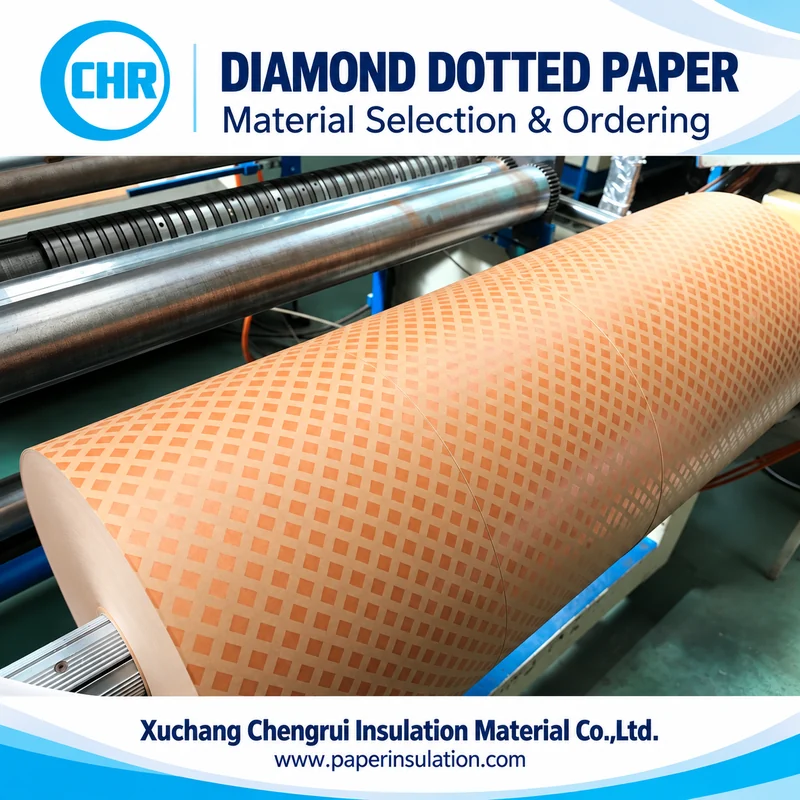
Diamond dotted paper jumbo roll. Confirm roll dimensions and processing requirements before ordering.
6. Agree on packaging, storage and shelf life
Request storage and handling guidance for the supplied grade. Include the expected shipping route and any need for protective packaging in the inquiry. Ask how the manufacturing date, storage period and expiry or recommended use date will be identified.
At receipt, check package condition and batch labels before releasing the material. If packaging is damaged or the storage history is uncertain, refer the lot to quality review instead of assuming that it remains suitable.
7. Define the batch documents and incoming checks
List the evidence your quality team needs before ordering. Depending on the approved specification, this may include a technical data sheet, agreed inspection results, a certificate of conformity and traceable batch identification. Confirm availability in advance.
For incoming inspection, separate visual checks from measured acceptance criteria. Appearance, dimensions and document completeness are different checks. If a test result is required, state its method, specimen conditioning and acceptance limit so both parties understand what the result means.
8. Approve a production trial before a material change
For a new grade or supplier, agree on the sample quantity and evaluation plan. Involve purchasing, winding production, process engineering and quality. Define who can approve the material and what evidence they need.
Once approved, record the grade and agreed specification revision on repeat orders. Ask the supplier to notify you of relevant changes to the base material, resin system, coating or manufacturing specification.
A practical DDP inquiry template
Send the following information with your request so the supplier can identify missing details before quoting:
Application: oil-immersed transformer layer insulation; drawing or specification revision.
Material: exact DDP grade, nominal thickness, tolerance and coating requirement.
Format: roll or slit roll, width, core, maximum diameter and splice requirements.
Process: relevant drying and curing information for technical review.
Quality: required documents, agreed tests and sample approval procedure.
Order: trial or production quantity, destination and requested delivery date.
Frequently asked questions
What should a diamond dotted paper purchase order include?
Include the approved grade, thickness and tolerance, coating specification, roll format, required documents and acceptance criteria. Reference the applicable drawing or material specification revision.
Can I select DDP thickness from transformer voltage alone?
Use the approved insulation design to specify thickness. A catalogue thickness list does not establish suitability for a particular transformer. Ask the responsible design engineer to confirm the material requirement.
Is there one curing temperature for all DDP insulation paper?
Obtain the instructions for the exact grade and validate them in your process. The resin system and manufacturing conditions matter; a generic temperature is not a complete curing specification.
Can standard DDP replace thermally upgraded DDP?
Treat a proposed substitution as a material change requiring technical review. Confirm the required grade and supporting evidence before releasing an order.
Discuss your DDP specification with Chengrui
Start with the DDP product specifications, then contact Chengrui with your thickness, coating requirement, roll dimensions and quantity. Request confirmation of the quoted grade, sample availability and supporting documents before placing an order.


Quick Quote