PMP Capacitor Composite Paper Applications
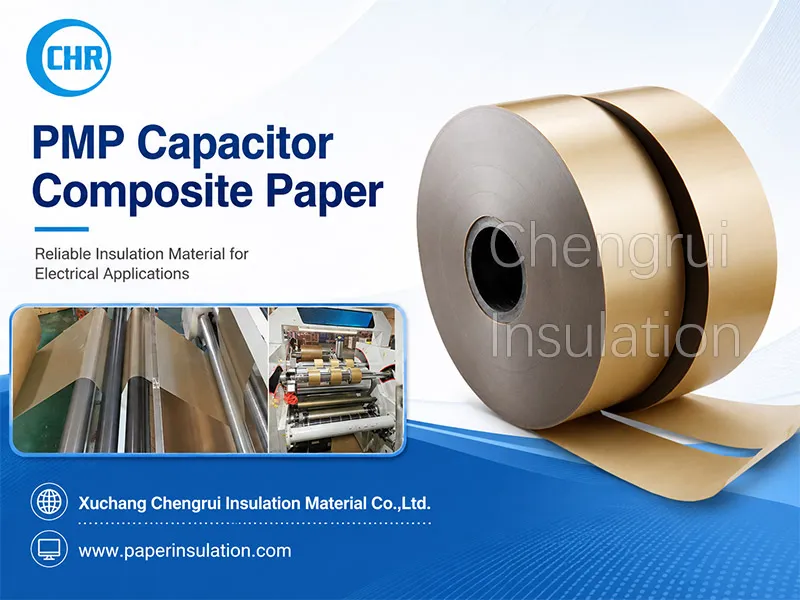
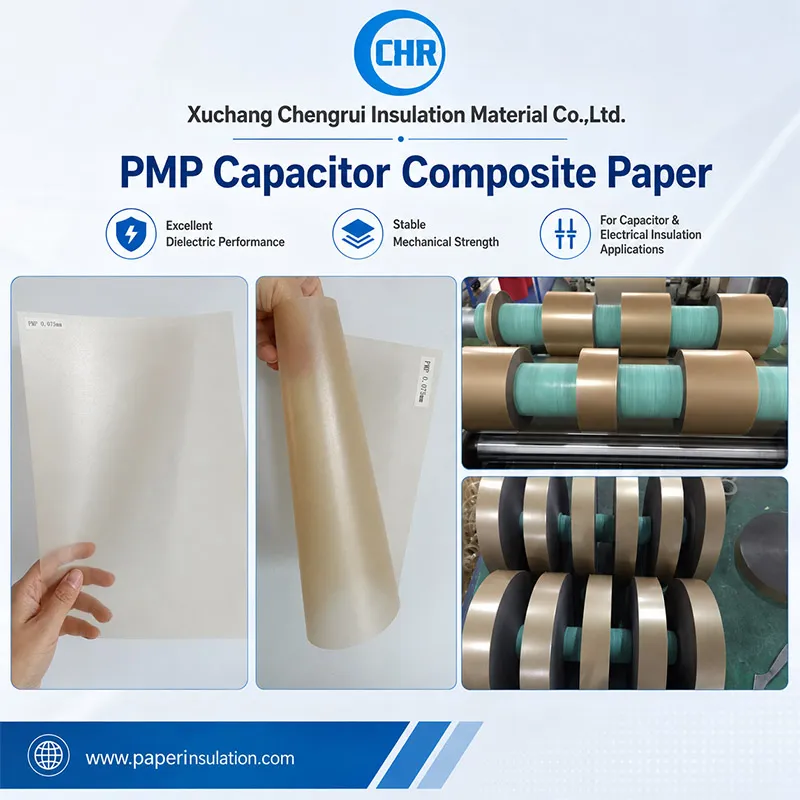
PMP capacitor composite paper is a flexible three-layer insulation material made from two layers of capacitor paper and one middle layer of polyester film.
The capacitor paper layers provide good impregnation compatibility and surface insulation performance, while the polyester film layer improves dielectric strength and mechanical performance. Because of this structure, PMP composite paper is used in many electrical insulation systems where paper alone is not strong enough, but a flexible insulation material is still required.
In practical applications, PMP capacitor composite paper is not only used for capacitors. It can also be used in transformers, motors, reactors, inductors and processed insulation parts.
Its main advantages are:
good dielectric performance;
improved mechanical strength;
good forming performance;
good heat resistance;
compatibility with insulation oil and impregnation process;
suitable for cutting, forming and insulation component processing.
For buyers, the key point is not only the material name. The real question is: Which electrical equipment will use the PMP paper, and which insulation position will it serve?
What Is PMP Capacitor Composite Paper?
PMP capacitor composite paper is a laminated insulation material with a paper-film-paper structure: Capacitor Paper + Polyester Film + Capacitor Paper
This structure gives the material a useful balance of electrical insulation and mechanical support.
The capacitor paper on both sides helps with impregnation and insulation compatibility. The polyester film in the middle improves tensile strength, dielectric strength and dimensional stability.
Compared with single-layer capacitor paper, PMP composite paper has better mechanical strength and handling performance. Compared with pure polyester film, it has better paper-based insulation compatibility in certain electrical equipment structures.
That is why PMP capacitor composite paper is often selected for transformer insulation, motor insulation, capacitor winding insulation and processed insulation components.
Application Overview
| Application Field | Typical Use | Main Benefit |
| Oil-immersed transformers | Coil pressboard areas, core pads, lead supports, clamps | Oil compatibility, insulation coordination, mechanical support |
| Dry-type transformers | Layer insulation, turn insulation, slot insulation under VPI process | Formability, heat resistance, stable insulation |
| High-voltage transformers | Lining insulation and support insulation | Improved insulation reliability and mechanical strength |
| E-class motors | Slot insulation, turn insulation, end insulation | Good forming performance and 120℃ working temperature |
| Special motors | Insulation structural parts for shielded motors and inverter motors | Anti-corona support and mechanical protection |
| Capacitors | Lining, separation and winding insulation | Suitable for high-frequency and pulse conditions |
| Reactors and inductors | Interlayer insulation and bobbin support | Reduces winding damage and improves structural stability |
| Processed insulation parts | Hard insulation boards, lead supports, support strips | Lightweight alternative to some traditional insulation boards |
Transformer Insulation
Oil-immersed transformers: Used for coil pressure plates, core spacers, trapezoidal spacers, conductor supports, clamping components, etc. The material features a dielectric constant close to that of transformer oil and offers rational insulation coordination, helping to reduce equipment weight and material costs.
Dry-type transformers: Compatible with Vacuum Pressure Impregnation (VPI) processes; used for interlayer, inter-turn, and slot insulation, balancing mechanical strength with heat resistance.
Motor Insulation
Class E motors: Suitable for slot insulation, inter-turn insulation, and end-winding pads in automated winding processes. Withstands operating temperatures of 120°C and offers excellent formability, facilitating automated winding.
Special-purpose motors: Used for insulation structural components in explosion-proof motors and variable-frequency drive (VFD) motors, enhancing the insulation system's corona resistance and mechanical protection capabilities.
Instrument Transformer Insulation
Cast-resin voltage transformers: Used for pad insulation, coil pressure plates, core spacers, clamping components, etc. Compatible with vacuum drying processes and insulation casting resins; ensures stable long-term operation at 105°C.
High-voltage instrument transformers: Serves as pad insulation and structural support material, enhancing the mechanical strength and dielectric reliability of the insulation assembly; suitable for both oil-immersed and dry-type applications.
Other Electrical Equipment
Capacitor manufacturing: Used for padding, isolation, and winding insulation in metallized film capacitors; suitable for high-frequency and pulse applications.
Reactors and inductors: Used for interlayer insulation and bobbin/frame support, helping to reduce losses and improve structural stability.
Insulation component fabrication: Can be punched, cut, or molded into coil end plates, lead supports, spacer strips, and more; serves as a lightweight alternative to traditional epoxy paperboard and laminated boards.
How to Choose PMP Capacitor Composite Paper
Before ordering PMP composite insulation paper, buyers should confirm the following points:
| Selection Point | What to Confirm |
| Application | Transformer, motor, capacitor, reactor or processed part |
| Insulation Position | Layer insulation, slot insulation, support, lining or winding insulation |
| Thickness | Based on insulation distance and mechanical requirement |
| Width | Roll width or slit width |
| Heat Resistance | Working condition depending on application |
| Impregnation Process | Transformer oil, VPI resin or other process |
| Forming Requirement | Flat sheet, folded part, molded part or cut component |
Related Products
Chengrui also supplies related electrical insulation materials, including:
Electrical Insulation Pressboard
FAQ
What is PMP capacitor composite paper?
PMP capacitor composite paper is a three-layer insulation material made from two layers of capacitor paper and one middle layer of polyester film.
What is PMP paper used for?
It is used for transformer insulation, motor insulation, capacitor winding insulation, reactor interlayer insulation and processed electrical insulation parts.
Can PMP paper be used in oil-immersed transformers?
Yes. PMP composite paper can be used in oil-immersed transformer insulation structures where oil compatibility and insulation coordination are required.


Quick Quote