Why Thermal Stability Matters in Oil-Immersed Transformers
Thermal stability determines whether an oil-immersed transformer can retain reliable insulation performance through continuous loading, ambient temperature changes and overload events. Winding losses produce localized heat, while the insulating liquid removes heat and contributes to dielectric separation. Solid insulation must preserve its physical integrity throughout this operating cycle. For engineers and procurement managers, thermal stability connects material selection directly to loading capability, maintenance planning and service life.
Temperature Drives Insulation Ageing
Cellulose-based winding insulation gradually loses mechanical strength as its molecular chains degrade. Temperature, moisture and oxygen influence this process, and the winding hot spot can experience substantially different conditions from the measured top-oil temperature. Repeated exposure to excessive temperatures can leave paper less able to tolerate mechanical stresses during a short-circuit event.
Thermal endurance describes performance over time under defined ageing conditions. A useful purchasing specification therefore identifies the insulation grade, expected operating environment and supporting ageing evidence. Initial dielectric strength alone provides an incomplete picture of the insulation's ability to remain serviceable after prolonged thermal exposure.
Evaluate the Complete Insulation System
The paper, pressboard, conductor insulation, bonding resin and insulating liquid operate together. Their compatibility, moisture condition and processing history influence the finished transformer's performance. Laboratory data should identify the specimen thickness, conditioning procedure and test method so that engineers can compare relevant results.
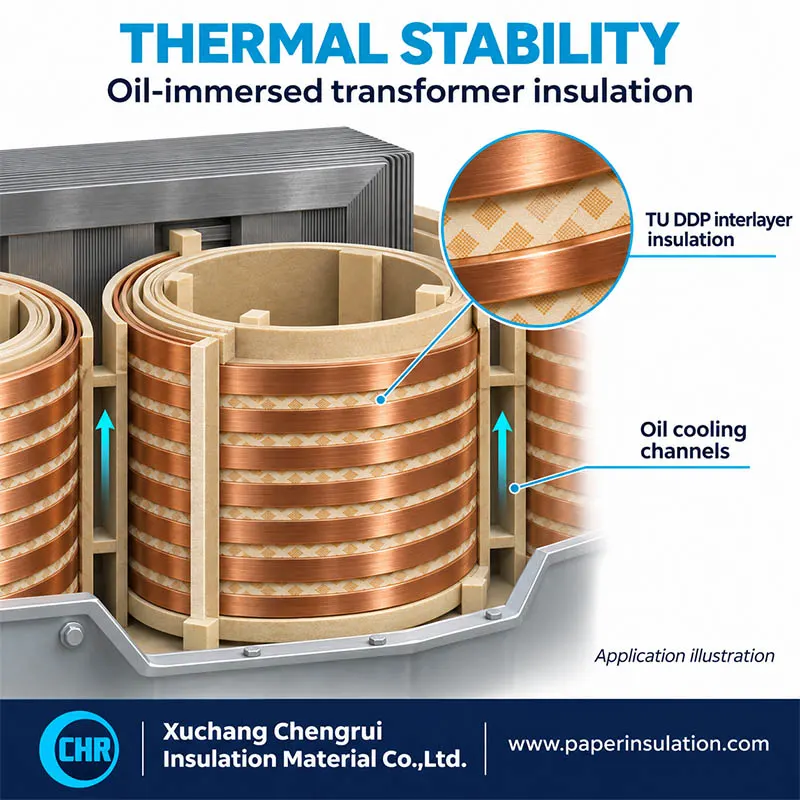
Cooling design and material choice should be reviewed together. Restricted oil passages, poorly controlled winding geometry or trapped moisture can create local conditions that exceed the assumptions used during approval. An upgraded paper grade contributes most when winding assembly, fluid circulation and production cleanliness are controlled.
Procurement teams covering both motor winding and transformer production should tie thermal classification to the validated system. Familiar Class F/H insulation designations correspond to thermal classes of 155°C and 180°C. Liquid-filled transformer operating limits require assessment against the applicable design and qualified solid–liquid insulation combination.
Where Thermally Upgraded DDP Can Help
Thermally upgraded diamond dotted paper, commonly abbreviated TU DDP or TUDDP, combines treated cellulose paper with discrete deposits of heat-curable resin. The upgraded paper supports improved resistance to thermal ageing when evaluated against the appropriate reference material. During the specified curing cycle, the resin dots bond adjacent winding layers, helping the assembly resist displacement under mechanical loading.
The discontinuous coating also leaves pathways that support moisture removal during drying and subsequent oil impregnation. When reviewing thermally upgraded diamond dotted paper, purchasers should distinguish the base-paper grade from the resin system and confirm curing temperature, holding time and contact pressure. Achieving a dependable bond requires controlled processing and verification of the finished assembly.
Use Standards Within Their Intended Scope
IEC 60076-7 addresses loading and thermal ageing in mineral-oil-immersed transformers. IEC 60085 provides a framework for thermal evaluation and designation of insulating materials and systems. These references help teams connect operating conditions with the evidence supporting material selection.
Component specifications also need precise scope. For example, IEC 60454-3-1 covers PVC film tapes with pressure-sensitive adhesive. A procurement package should identify the standard applicable to each material, together with the required test conditions and acceptance criteria.
Translate Thermal Requirements into Purchasing Controls
A practical approval process combines document review with representative production trials. Request traceable technical data, thickness tolerances, moisture requirements, storage instructions and any relevant ageing or bonding results. Confirm that sample preparation and factory drying reflect the proposed production route.
During manufacture, monitor drying conditions, resin curing and handling after drying. During service, interpret loading and temperature trends alongside oil condition and maintenance findings. Consistent control of these variables helps preserve the insulation system's electrical and mechanical integrity across its intended operating life.


Quick Quote