Polyimide Composite Insulation Paper: NHN vs AHA Complete Guide
When a motor fails prematurely, the root cause is often traced back to one overlooked component: the insulation system. In high-performance electrical equipment operating at Class H temperatures (180°C and above), standard insulation materials simply cannot hold up. That is why engineers and procurement managers worldwide are turning to polyimide composite insulation paper — a class of advanced materials engineered specifically for extreme thermal and electrical demands.
Among all polyimide composite insulation papers available today, two grades dominate the market: NHN (Nomex®-Polyimide-Nomex®) and AHA (Aramid-Polyimide-Aramid). Both are widely used in motors, generators, dry-type transformers, and other Class H insulation systems — but they are not interchangeable. Choosing the wrong grade can mean compromised performance, shortened equipment lifespan, or failed compliance audits.
This guide breaks down everything you need to know: what polyimide composite insulation paper is, how NHN and AHA differ structurally and technically, which applications each grade is best suited for, and how to evaluate suppliers when sourcing in bulk. Whether you are an electrical engineer specifying materials or an importer placing container-load orders, this guide gives you the technical foundation to make the right decision.
What Is Polyimide Composite Insulation Paper?
Polyimide composite insulation paper is a multi-layer laminated material that combines a polyimide (PI) film core with one or more outer layers of fibrous insulation paper. The polyimide film provides outstanding dielectric strength, thermal stability, and mechanical toughness, while the outer paper layers add surface texture, bonding capability, and processability for winding and slot insertion.
The result is a material that outperforms either component alone. Pure polyimide film (such as Kapton®) is an excellent insulator but difficult to process in motor winding operations due to its smooth, slippery surface. Fibrous papers like Nomex® or aramid paper bond well and are easy to handle, but lack the dielectric performance of polyimide film. The composite structure captures the best of both worlds.
Key definition: Polyimide composite insulation paper = fibrous outer layer(s) + polyimide film core, laminated under heat and pressure into a unified sheet material.
These composites are classified under IEC 60371 and NEMA standards for slot insulation, phase insulation, and turn insulation in Class H electrical equipment. They are available in thicknesses typically ranging from 0.17 mm to 0.40 mm, and in standard roll widths suited to motor manufacturing and transformer winding operations.
6650 NHN Insulation Paper (Nomex®-Polyimide-Nomex®)
NHN insulation paper is a three-layer composite consisting of Nomex® aramid paper on both outer surfaces, bonded to a polyimide film core. "NHN" stands for Nomex-H-Nomex, where "H" refers to the polyimide (Kapton® H-type) film at the center. This construction is also commercially designated as Type 6650 in many industry catalogs, a designation originally introduced by DuPont.
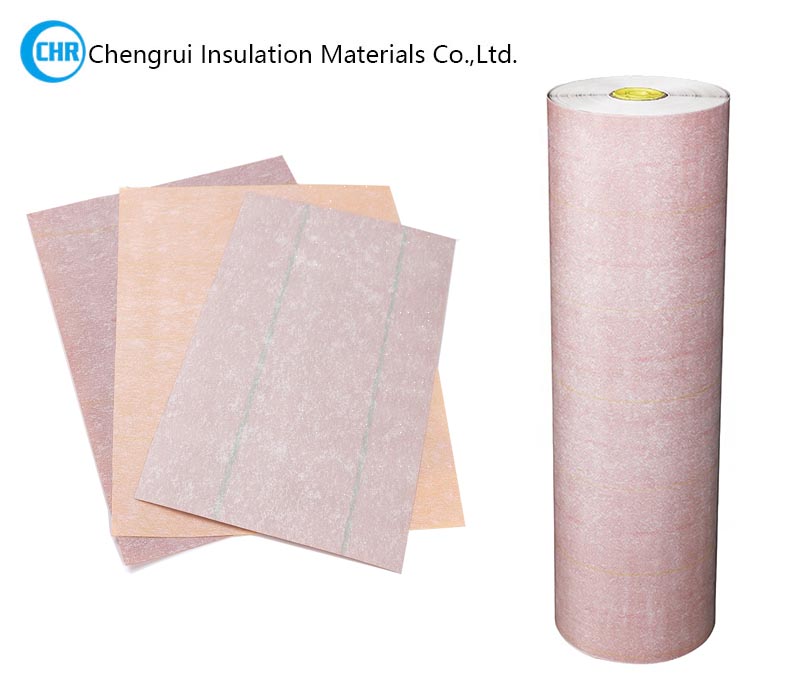
The Nomex® outer layers give NHN its characteristic matte, slightly rough surface — ideal for adhesive bonding in slot liners and for handling in automated winding machinery. The polyimide film core is what gives NHN its exceptional dielectric strength and thermal endurance.
Primary Applications of NHN Insulation Paper
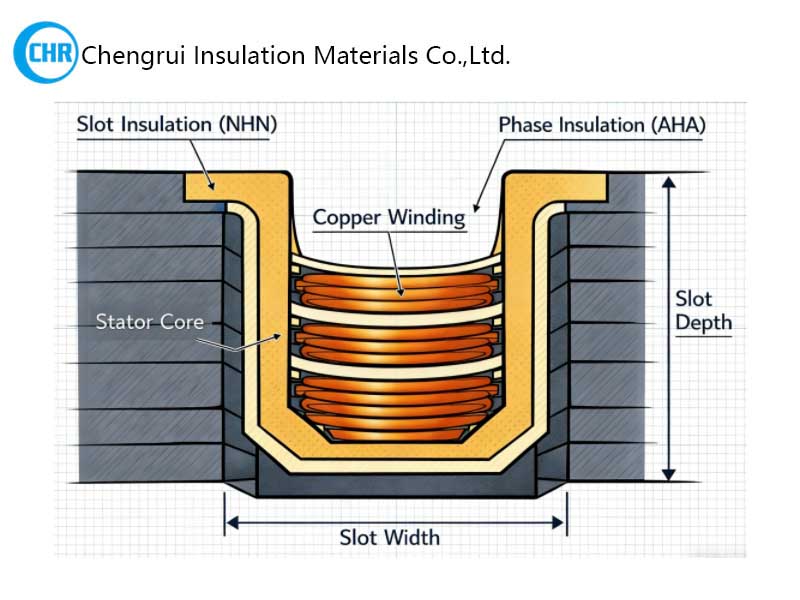
NHN is the preferred choice for high-end Class H motor and generator applications where flame resistance is a regulatory requirement or where the equipment will be subjected to VPI treatment. Specific applications include slot insulation in Class H AC motors (IEC frame sizes 160–450), phase insulation in three-phase induction motors, turn insulation in form-wound coils for large generators, dry-type distribution transformers (cast resin type), traction motors for rail and electric vehicle applications, and compressor motors in HVAC and refrigeration systems.
NHN is particularly dominant in markets with strict fire safety standards, including the European Union (CE marking requirements), North America (UL/CSA certification), and increasingly in Middle Eastern and Southeast Asian infrastructure projects.
AHA Insulation Paper (Aramid-Polyimide-Aramid)
AHA insulation paper follows the same three-layer composite logic as NHN, but substitutes para-aramid fiber paper for the outer layers instead of Nomex® meta-aramid paper. The "A" in AHA stands for aramid, and the "H" again refers to the polyimide film core.
The distinction between meta-aramid (Nomex®) and para-aramid outer layers is subtle but significant. Para-aramid fibers are arranged in a more ordered molecular structure, which gives AHA slightly different mechanical and processing characteristics compared to NHN.
Primary Applications of AHA Insulation Paper
AHA is widely used in standard Class H motor applications where cost efficiency is a priority and where the strict flame-resistance requirements of Nomex® are not mandated. Common applications include slot insulation in standard Class H motors for industrial drives, phase insulation in small and medium-frame motors (IEC 80–160), transformer winding insulation in oil-immersed transformers, coil wrapping in solenoids and electromagnets, and general-purpose Class H slot liners for motor repair and rewinding shops.
AHA is particularly popular in price-sensitive export markets including Southeast Asia (Indonesia, Vietnam, Thailand), South Asia (Bangladesh, India), and parts of Africa and South America, where motor manufacturers are optimizing for cost without sacrificing thermal class compliance.
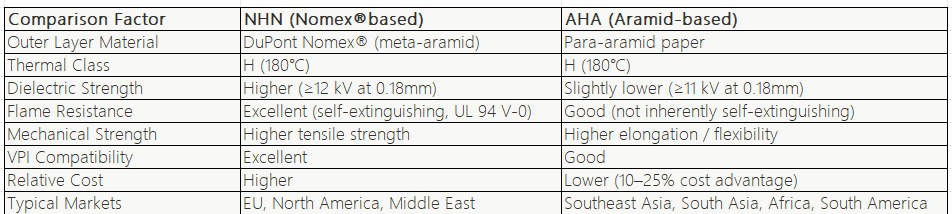
Choose NHN if: Your end customers are in regulated markets (EU, North America, Middle East), the application involves traction motors or safety-critical equipment, the motor will undergo VPI treatment, or flame resistance certification is required.
Choose AHA if: Your end customers are in cost-sensitive markets (Southeast Asia, South Asia, Africa), the application is standard industrial motors or transformers, price competitiveness is a key purchasing driver, and standard IEC Class H compliance is sufficient.
Many importers and distributors stock both grades to serve different customer segments — NHN for premium OEM customers and AHA for the repair and rewinding market.
How to Choose the Right Supplier for Polyimide Composite Insulation Paper
Sourcing polyimide composite insulation paper in bulk (container-load quantities) requires careful supplier evaluation. The following criteria should guide your selection process.
1. Verify raw material sourcing. For NHN, confirm whether the supplier uses genuine DuPont Nomex® or a substitute meta-aramid paper. Genuine Nomex® commands a price premium but guarantees consistent performance and supports UL/CE certification claims. Ask for a material declaration or raw material certificate.
2. Request certified test reports (CTR). A reliable supplier should provide third-party test reports for dielectric strength, tensile strength, thermal endurance, and flame resistance for each product grade. Test reports should reference IEC 60626, IEC 60243, and UL 94 standards.
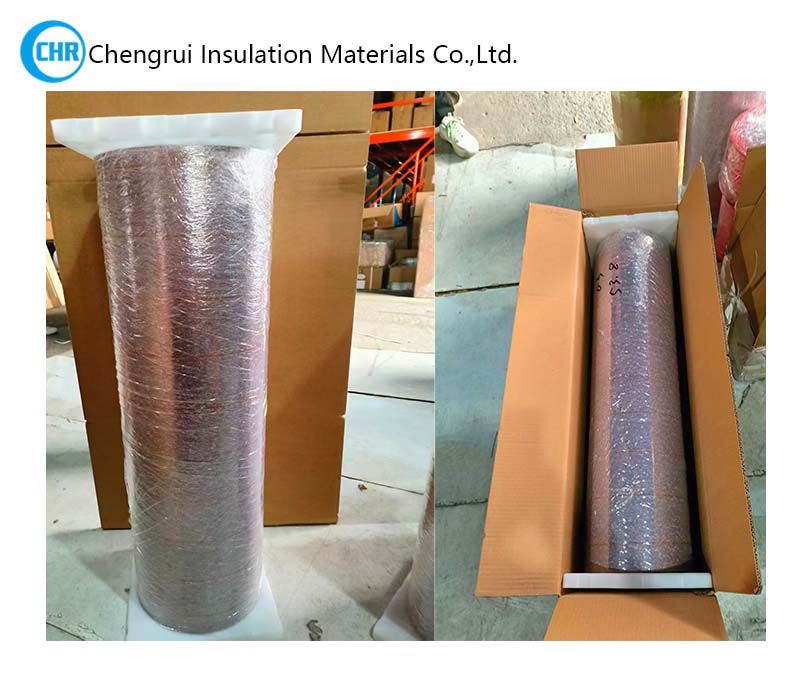
3. Evaluate production capacity and lead times. Container-load orders (typically 5–15 MT per 20' FCL) require suppliers with sufficient production capacity and inventory management. Ask about standard lead times, minimum order quantities (MOQ) per SKU, and whether they can accommodate mixed-product containers.
4. Check export experience and documentation. For international shipments, the supplier should be experienced with export documentation including commercial invoices, packing lists, certificates of origin, and MSDS. Suppliers with established export channels to your target markets will be more reliable partners.
5. Assess quality management systems. ISO 9001 certification is a baseline requirement. For suppliers serving the automotive or traction market, IATF 16949 certification is an additional quality signal.
6. Request samples before placing bulk orders. Always test samples in your own production process or send to your end customers for evaluation before committing to a full container order. Key tests to run: slot insertion performance, VPI absorption, and post-cure adhesion.
FAQ: Polyimide Composite Insulation Paper
Q: What is the difference between NHN and NMN insulation paper?
NHN uses a polyimide (Kapton®) film as the core layer, while NMN uses a polyester (Mylar®) film. NHN is rated for Class H (180°C), whereas NMN is typically rated for Class B or F (130–155°C). NHN is the correct choice for high-temperature applications; NMN is used in lower-temperature motor classes.
Q: Can NHN and AHA insulation paper be used in oil-immersed transformers?
Both NHN and AHA can be used in oil-immersed transformers, but AHA is more commonly specified for this application due to its cost advantage and good oil compatibility. NHN is more commonly used in dry-type (cast resin) transformers where flame resistance is critical.
Q: What thickness of polyimide composite insulation paper is most commonly used for slot insulation?
The most common thickness for slot insulation in standard industrial motors is 0.25 mm (for IEC frame sizes 160 and above) and 0.18 mm (for smaller frame sizes). The choice depends on the slot geometry, voltage class, and the motor manufacturer's design specification.
Conclusion
Polyimide composite insulation paper — whether in NHN or AHA form — represents the gold standard for Class H electrical insulation in motors, generators, and transformers. The choice between the two grades is not a matter of one being universally superior; it is a matter of matching the material's performance profile to the application requirements and market context.
NHN delivers higher flame resistance, superior dielectric strength, and broader certification coverage — making it the right choice for premium, safety-critical, and export-to-regulated-markets applications. AHA delivers reliable Class H performance at a more competitive price point — making it the practical choice for standard industrial motors and cost-sensitive export markets across Southeast Asia, South Asia, Africa, and South America.
For importers and distributors, stocking both grades allows you to serve the full spectrum of your customer base: from OEM motor manufacturers requiring certified NHN to repair shops sourcing economical AHA for rewinding operations.
Ready to source polyimide composite insulation paper for your next container shipment? We supply both NHN and AHA in full container loads, with competitive pricing, certified test reports, and export documentation support. [Get a Free Quote & Sample →]


Quick Quote