Polyimide Film Sold to Thailand for Electrical Insulation
A customer from Thailand contacted Chengrui to source polyimide film for electrical insulation applications.
The customer was not looking for ordinary plastic film. Their application required a thin, flexible and heat-resistant insulation film that could be used in motor insulation, transformer insulation and customized die-cut insulation parts.
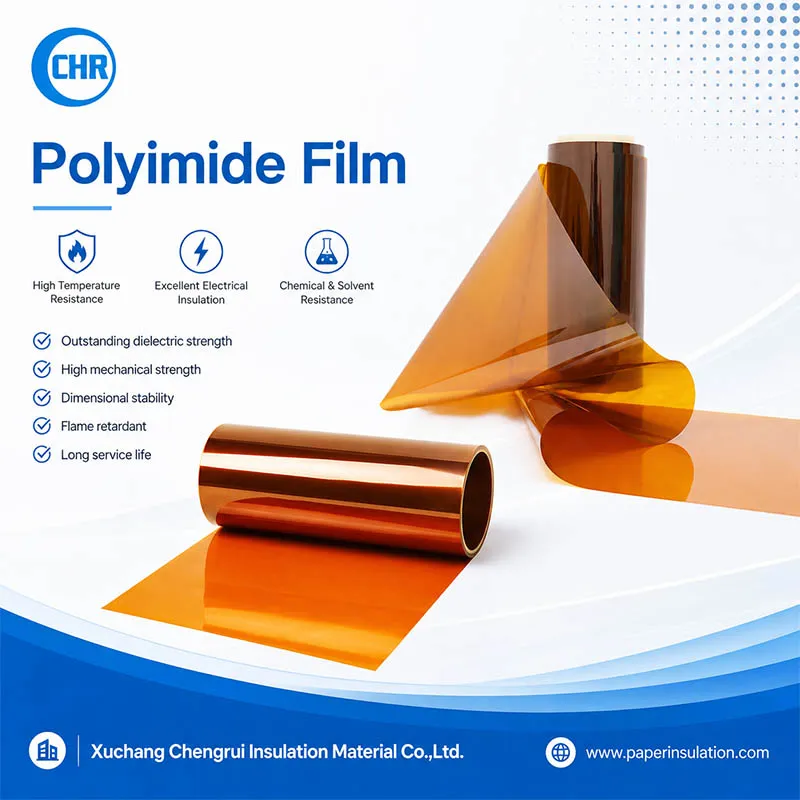
After discussing the application, thickness requirement and processing method, Chengrui recommended standard amber polyimide film in roll form for sample testing and production evaluation.
The customer finally selected polyimide film because it offered better heat resistance than regular polyester film and better flexibility for electrical insulation processing.
Customer Background
The customer is an electrical insulation material user in Thailand. Their work involves supplying or processing insulation materials for motors, transformers and industrial electrical equipment.
Before contacting Chengrui, the customer had used similar high-temperature insulation films from other sources, but they wanted to compare material quality, price, sample support and delivery flexibility from a Chinese supplier.
Their main concerns were practical:
whether the film could withstand high-temperature electrical applications;
whether the thickness was stable;
whether the roll surface was clean and flat;
whether the film could be slit or cut for different insulation parts;
whether sample testing could be arranged before bulk purchase;
whether packing was suitable for export shipment to Thailand.
For this type of customer, the material itself is important, but stable supply and communication are just as important.
Product Supplied
| Item | Description |
| Product | Polyimide Film |
| Color | Amber |
| Form | Roll |
| Thickness | 0.03mm 0.05mm |
| Main Feature | High temperature resistance and electrical insulation |
| Application | Motor insulation, transformer insulation, die-cut insulation parts |
| Destination | Thailand |
Polyimide film is widely used when ordinary polyester film cannot meet the temperature requirement.
For many electrical insulation applications, polyester film is still a cost-effective material. But when the working temperature is higher, or when the customer needs better thermal stability, polyimide film becomes a more suitable choice.
Why the Customer Chose Polyimide Film
The Thailand customer needed a film that could be used in different electrical insulation positions.
Polyimide film was selected because of its combination of:
high temperature resistance;
good dielectric insulation;
thin and flexible structure;
stable mechanical performance;
good dimensional stability;
clean surface for further processing;
suitability for die-cut insulation parts.
For motor and transformer applications, the insulation film must remain stable during winding, assembly, heating and long-term operation. This is why the customer wanted to test polyimide film instead of using a lower-temperature material directly.
Thickness and Size Selection
For polyimide film, thickness selection depends on the final application.
Common thicknesses include:
25μm:Thin insulation layer, wrapping and electronics insulation
50μm: General motor and transformer insulation parts
75μm: Stronger insulation pieces and die-cut parts
100μm: Higher mechanical support and thicker insulation layer
125μm: Special insulation parts requiring more thickness
Sample Testing Before Bulk Order
For this project, sample testing was an important step.
The customer needed to check whether the polyimide film could match their real production process.
The sample evaluation mainly focused on:
appearance
film color
thickness
flexibility
surface cleanliness
This helped reduce the risk of ordering the wrong material.
For electrical insulation materials, datasheets are useful, but real sample testing is still necessary because each customer may use the material in a different way.
Packing and Export to Thailand
Because polyimide film is thin and easily affected by poor handling, packing was also important.
Chengrui used export packing to protect the roll during transportation.
For Thailand shipments, Chengrui can support courier shipment for samples and air or sea shipment for bulk orders depending on order quantity and delivery requirement.
Customer Feedback
After receiving the polyimide film sample, the Thailand customer tested it in their regular insulation processing workflow, including surface inspection, manual cutting, flexibility checking and trial die-cutting.
Compared with the polyester film previously used for standard insulation parts, the polyimide film gave the customer a higher thermal safety margin. The working temperature range was improved from regular Class B insulation applications to high-temperature insulation positions where PI film is more suitable. During the trial, the film kept good flexibility after cutting, showed no obvious cracking at the edges, and remained flat during handling.
The customer also reported that the roll surface was clean and uniform, which helped reduce visible defects during die-cutting. For small insulation parts, the stable film thickness and smooth surface made the material easier to process and inspect.
Based on the sample test, the customer considered the material suitable for further evaluation in motor insulation, transformer insulation and customized die-cut insulation parts. They also discussed future demand for slit rolls, because using pre-slit widths could help reduce manual cutting time and improve material utilization in their workshop.
For Chengrui, this project was not only about supplying polyimide film to Thailand. It was about helping the customer move from general insulation film to a more suitable high-temperature insulation material, while supporting sample testing, custom width discussion and future batch supply.
Polyimide Film vs Polyester Film
Some Thailand buyers ask whether polyester film can replace polyimide film.
The answer depends on the working temperature and insulation requirement.
| Item | Polyimide Film | Polyester Film |
| Material | Polyimide resin | PET |
| Thermal Class | H Class 180℃ | E Class 120℃ |
| Common Color | Amber, Transparent and black available | Transparent, milky white, black |
| Electrical Insulation | Excellent dielectric performance | Good dielectric performance for regular insulation |
Related Products
Chengrui also supplies related insulation films and tapes for Thailand customers:
These materials are widely used in motor insulation, transformer insulation, electrical equipment assembly and die-cut insulation parts.
FAQ
Q1: Can Chengrui supply polyimide film to Thailand?
A: Yes. Chengrui can supply polyimide film to Thailand in rolls, slit rolls or customized sizes according to customer requirements.
Q2: What is polyimide film used for in Thailand?
A: Polyimide film is commonly used for motor insulation, transformer insulation, electronics insulation, coil wrapping, lead protection and die-cut insulation parts.
Q3: Is polyimide film the same as Kapton film?
A: Kapton is a well-known brand name for polyimide film. In many markets, buyers use “Kapton film” to refer to high-temperature polyimide insulation film.


Quick Quote