Why 7628 Fiberglass Cloth Is Commonly Used in G10 Epoxy Sheets
When buyers ask about G10 epoxy fiberglass sheets, they usually ask about thickness, sheet size, color, mechanical strength, dielectric strength or machining tolerance.
But for manufacturers, one of the most important materials behind the finished G10 sheet is the glass fabric.
G10 sheet is not made by mixing chopped glass fiber with resin. It is a laminated material made from woven glass fabric impregnated with epoxy resin, stacked layer by layer, and pressed under heat and pressure.
Among many glass fabric styles, 7628 E-glass fabric is commonly used for standard G10 and FR4 epoxy glass laminates.
The reason is practical:
7628 glass fabric gives a stable balance of thickness build-up, resin impregnation, mechanical strength, electrical insulation performance, production efficiency and cost.
What Is G10 Epoxy Fiberglass Sheet?
G10 epoxy fiberglass sheet is a rigid laminated insulation material made from glass fiber cloth and epoxy resin.
The glass fabric provides the main mechanical reinforcement. The epoxy resin bonds the layers together and provides electrical insulation, dimensional stability and a hard laminated body.
After curing, G10 sheet is widely used for:
electrical insulation plates;
support plates;
spacers and washers;
terminal boards;
transformer support parts;
motor slot wedges;
CNC machined insulation parts;
industrial mechanical insulation components.
For these applications, the internal laminate structure must be stable. If the glass fabric or resin impregnation is not well controlled, the finished sheet may have poor edge quality, weak bonding, uneven thickness or unstable machining performance.
What Is 7628 Glass Fabric?
7628 glass fabric is a common woven E-glass cloth used in epoxy glass laminates.
It has a medium fabric thickness and a stable woven structure. In G10 and FR4 production, this makes it easier to build up sheet thickness while still allowing epoxy resin to penetrate the fabric properly.
Why 7628 Glass Fabric Is Used in G10 Sheets
1. It Builds Sheet Thickness Efficiently
G10 sheets are made by stacking multiple layers of resin-impregnated glass cloth.
For common industrial thicknesses, the manufacturer needs a fabric that can build thickness efficiently without creating too much internal variation.
If the fabric is too thin, many layers are required. This increases handling work, stacking time and production cost.
If the fabric is too thick, the board can be built faster, but the resin may not penetrate as evenly, and the finished sheet may be more difficult to control.
7628 glass fabric is widely used because it sits in a useful middle range.
2. It Allows Good Epoxy Resin Impregnation
For G10 sheets, resin impregnation is not a small detail.
The epoxy resin must enter the woven glass fabric and fill the gaps between yarns and layers. If the resin does not penetrate well, the finished board may have internal defects.
7628 glass fabric has a mature woven structure that works well with epoxy resin impregnation.
3. It Gives Stable Mechanical Strength
G10 is not only an insulation sheet. In many applications, it also works as a structural support material.
7628 glass fabric is commonly used because it provides enough reinforcement for many standard electrical and mechanical insulation parts without making the laminate unnecessarily expensive.
4. It Helps Keep Thickness and Flatness More Stable
In G10 sheet production, glass fabric layers must stay aligned during stacking, pressing and curing.
7628 glass fabric is widely used because it is stable and familiar in production. Manufacturers understand how it behaves during resin impregnation, stacking and hot pressing.
This helps keep the finished G10 sheet more consistent from batch to batch.
5. It Supports Electrical Insulation Performance
G10 sheet is used in electrical insulation applications because the cured epoxy glass laminate provides good dielectric performance.
The glass cloth and epoxy resin must work together as a dense laminate. Internal gaps, dry yarn or poor bonding can affect insulation reliability.
Using a stable glass fabric such as 7628 helps the manufacturer produce a more uniform laminate structure.
Is 7628 the Only Glass Fabric Used in G10?
No.
7628 is common, but it is not the only glass fabric used in G10 epoxy fiberglass sheets.
Different glass cloth styles may be selected depending on the required thickness, surface quality, mechanical strength, dielectric performance and customer specification.
| Glass Fabric Type | General Feature | When It May Be Used |
| 1080 | Thin and fine glass fabric | Thin laminates or smoother surface requirements |
| 2116 | Medium-thin glass fabric | Thin to medium laminates with better surface control |
| 7628 | Medium thickness, stable woven structure | Standard G10 and FR4 laminated sheets |
Why Buyers Should Not Judge G10 Sheet Only by Glass Fabric Number
Some buyers may think:
If the sheet uses 7628 glass fabric, it must be good.
This is not always true.
7628 glass fabric is important, but the final G10 sheet quality also depends on epoxy resin system, impregnation quality, pressing temperature, curing process, sheet thickness tolerance, and post-processing and cutting quality.
Two G10 sheets may both use 7628 fabric, but the finished quality can still be different if the resin system or lamination process is not the same.
7628 Glass Fabric in G10 vs FR4
G10 and FR4 are both epoxy glass cloth laminates.
Both may use 7628 E-glass fabric or other glass fabric styles. The difference between G10 and FR4 is mainly not the glass cloth itself, but the resin system and flame-retardant requirement.
| Item | G10 Epoxy Fiberglass Sheet | FR4 Epoxy Glass Sheet |
| Reinforcement | Woven E-glass fabric | Woven E-glass fabric |
| Common Fabric | 7628 and other fabric styles | 7628 and other fabric styles |
| Flame Retardancy | No | Yes |
This means 7628 glass fabric can be used in both G10 and FR4.
If the customer needs flame-retardant performance, FR4 is usually selected.
If flame retardancy is not required and the application needs general epoxy glass insulation, G10 may be suitable.
Common Applications of G10 Sheets Made with 7628 Glass Fabric
G10 sheets made with 7628 glass fabric are commonly used in industrial electrical insulation parts.
Typical applications include:
1. Electrical Insulation Plates
Used inside electrical equipment where rigid insulation is needed.
2. Terminal Boards
Used to support electrical terminals and maintain insulation distance.
3. Transformer Support Parts
Used as support plates, spacers, washers and insulation blocks.
4. Motor Slot Wedges
Machined into wedges or strips for motor slot closing and winding support.
5. CNC Machined Insulation Parts
Cut, drilled and milled into custom insulation components according to drawings.
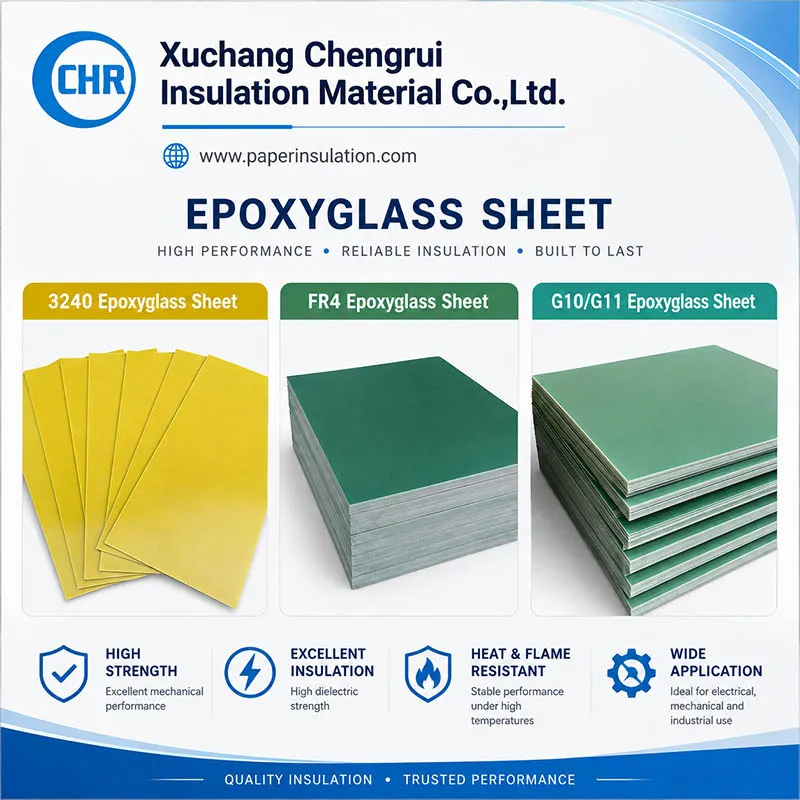
G10, FR4, G11 and 3240: How to Choose
Customers often compare G10 with FR4, G11 and 3240.
| Material | Main Feature | When to Choose |
| G10 | Epoxy glass laminate with good strength and insulation | General electrical and mechanical insulation parts |
| FR4 | Flame-retardant epoxy glass laminate | Electrical insulation parts requiring flame retardancy |
| G11 | Higher-temperature epoxy glass laminate | Higher-temperature electrical insulation applications |
| 3240 | Industrial epoxy glass cloth laminated sheet | Economical electrical and mechanical insulation parts |
If the project requires general mechanical strength and insulation, G10 insulation sheet may be enough.
If the project requires flame retardancy, FR4 insulation sheet is usually the better option.
If the part works at a higher temperature, G11 insulation sheet should be considered.
If the project is cost-sensitive and follows common industrial requirements, 3240 insulation sheet may also be an option.
FAQ
Q1: Why is 7628 glass fabric commonly used in G10 sheets?
A: 7628 glass fabric is commonly used because it offers a practical balance of thickness build-up, resin impregnation, mechanical strength, electrical insulation performance, production efficiency and cost.
Q2: Is 7628 the only fabric used for G10?
A: No. 7628 is widely used, but thinner fabrics such as 1080 or 2116, or heavier glass cloth styles, may also be used depending on the sheet thickness and performance requirement.
Q3: Does 7628 glass fabric mean the G10 sheet quality is always better?
A: Not necessarily. 7628 is only one part of the laminate. Resin system, impregnation quality, curing process, pressing control and machining quality also affect the final sheet performance.
Q4: Can FR4 also use 7628 glass fabric?
A: Yes. FR4 epoxy glass laminate can also use 7628 glass fabric. The main difference between G10 and FR4 is usually the flame-retardant epoxy resin system.
Conclusion
7628 glass fabric is commonly used in G10 epoxy fiberglass sheets because it is practical for standard laminate production.
It helps manufacturers build sheet thickness efficiently, allows good epoxy resin impregnation, supports stable mechanical strength, and keeps production cost reasonable.
For buyers, the best approach is to confirm the final application first: thickness, mechanical load, electrical insulation requirement, flame retardancy, machining tolerance and working environment.
Chengrui supplies G10, FR4, G11, FR5, 3240 epoxy glass sheets and custom machined insulation parts for transformers, motors, electrical panels and industrial equipment.


Quick Quote