Diamond Dotted Paper(DDP) vs Thermally Upgraded DDP for Transformers
Diamond dotted paper and thermally upgraded diamond dotted paper are both used in oil-immersed transformers for winding interlayer insulation and conductor bonding.
The main difference is simple:
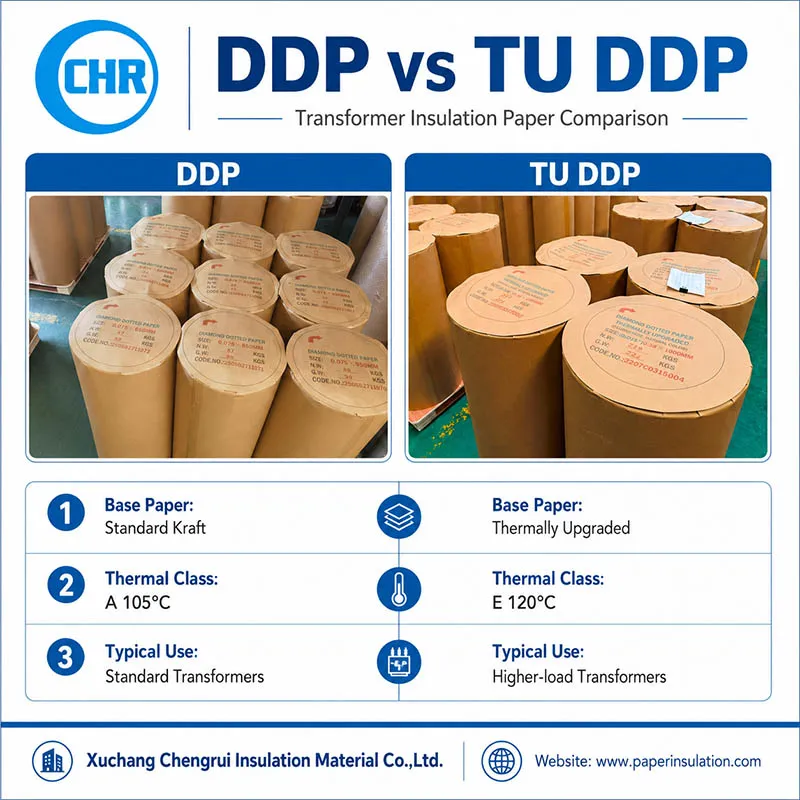
Diamond dotted paper uses standard electrical insulation paper as the base paper. Thermally upgraded diamond dotted paperuses thermally upgraded insulation paper (nitrogen filling) with better thermal aging resistance.
For standard oil-immersed distribution transformers, ordinary diamond dotted paper is usually enough. For transformers that require better thermal life, overload capacity or long-term reliability, thermally upgraded diamond dotted paper is the better choice.
Overview of Diamond Dotted Paper
Diamond dotted paper, also called DDP insulation paper, is an electrical insulation paper coated with B-stage epoxy resin in a diamond pattern.
During transformer winding and drying, the epoxy resin dots soften and cure under heat and pressure. After curing, the insulation paper bonds with the winding structure and helps improve coil stability.
Diamond dotted paper is commonly used for:
transformer winding interlayer insulation
conductor insulation
coil bonding
winding structure reinforcement
oil-immersed transformer insulation systems
The diamond resin pattern is important because it leaves space for transformer oil flow while still providing bonding strength after curing.
Overview of Thermally Upgraded Diamond Dotted Paper
Thermally upgraded diamond dotted paper, often called TU DDP, has the same diamond epoxy resin pattern as ordinary DDP.
The difference is the base paper.
Ordinary DDP usually uses standard electrical kraft paper or cable paper.
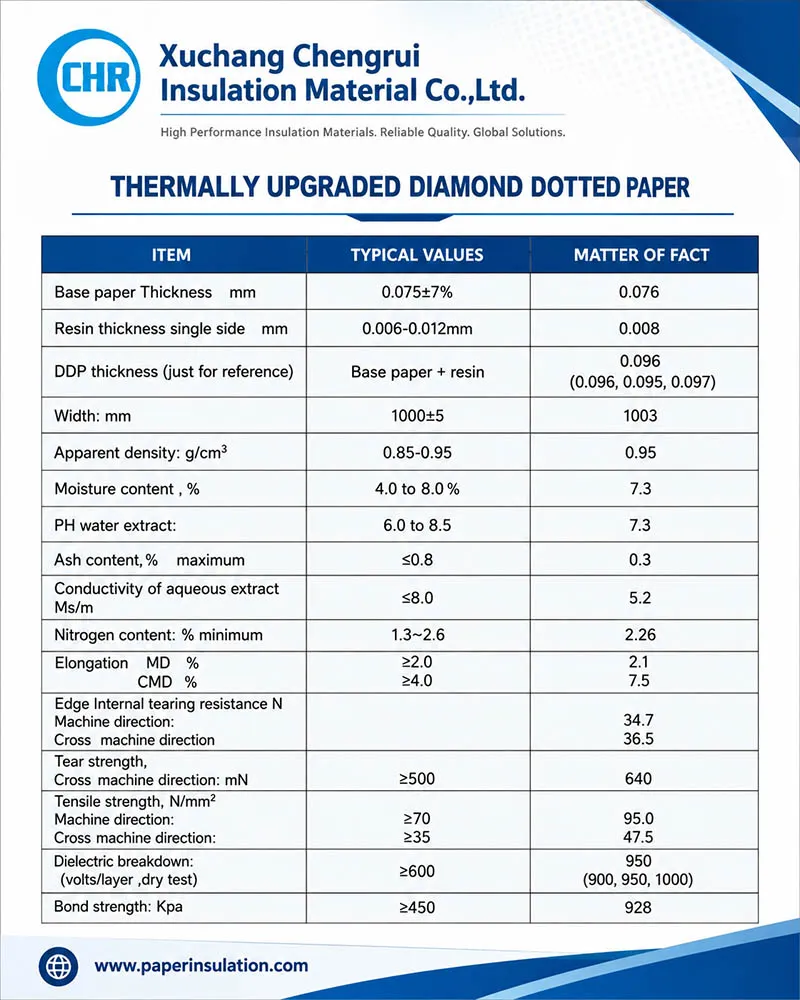
Thermally upgraded DDP uses thermally upgraded insulation paper(Nitrogen Content: 1.3-2.6%). This base paper is specially treated to improve resistance to thermal aging.
In transformer design, this matters because insulation aging is strongly related to heat. Better thermal aging resistance can help improve insulation life under higher operating temperatures or heavier load conditions.
Comparison: DDP vs TU DDP
| ITEM | DIAMOND DOTTED PAPER (DDP) | THERMALLY UPGRADED DIAMOND DOTTED PAPER (TU DDP) |
| Base paper | Electrical kraft paper / cable paper | Thermally upgraded insulation paper |
| Resin Pattern | Diamond-shaped epoxy resin dots | Diamond-shaped epoxy resin dots |
| Main Function | Interlayer insulation and bonding | Interlayer insulation, bonding and better thermal aging resistance |
| Aging Resistance | Standard | Better |
| Thermal Class | Class A 105℃ | Class E 120℃ |
| Coating Type | Single-side or double-side epoxy resin | Single-side or double-side epoxy resin |
| Typical Use | Standard oil-immersed transformers | Higher-load or longer-life transformers |
The data above is a common reference range. Final selection should always be confirmed according to the transformer design, voltage level, temperature class and supplier TDS.
When to Use Ordinary Diamond Dotted Paper
Ordinary diamond dotted paper is suitable for many standard transformer designs.
It is commonly used in:
1. oil-immersed distribution transformers
2. standard winding interlayer insulation
3. regular conductor insulation
4. cost-sensitive transformer projects
5. mass production transformer manufacturing
If the transformer operates under normal load conditions and does not require higher thermal aging performance, ordinary DDP is usually a practical and cost-effective option.
For many distribution transformer manufacturers, DDP remains one of the most commonly used insulation materials because it provides bonding, insulation and winding stability at a reasonable cost.
When to Use Thermally Upgraded Diamond Dotted Paper
Thermally upgraded diamond dotted paper is selected when the transformer requires better thermal performance.
It is more suitable for:
1. transformers with higher load requirements
2. transformers requiring longer insulation life
3. designs with higher thermal stress
4. export transformers with stricter reliability requirements
5. transformers where thermal aging is a key concern
6. higher-performance oil-immersed transformer designs
The main reason to choose TU DDP is not appearance. It is improved thermal aging resistance.
In transformer insulation systems, paper aging can affect long-term reliability. When the transformer is expected to operate under higher temperature conditions, thermally upgraded paper can provide a safer design margin.
Curing and Bonding Performance
Both DDP and TU DDP use B-stage epoxy resin.
Before curing, the resin dots remain stable on the paper surface and allow the material to be wound normally.
During transformer drying and hot pressing, the resin softens, flows slightly and bonds the winding layers together.
Typical curing reference conditions may include:
130 ± 5°C for around 5 hours
150 ± 5°C for around 3 hours
Actual curing conditions should follow the supplier's technical datasheet and the transformer manufacturer's production process.
FAQ
Q1: What is the difference between diamond dotted paper and thermally upgraded diamond dotted paper?
A: The main difference is the base paper. Ordinary diamond dotted paper uses standard electrical insulation paper, while thermally upgraded diamond dotted paper uses thermally upgraded insulation paper with better thermal aging resistance.
Q2: Is thermally upgraded diamond dotted paper always better?
A: Not always. TU DDP has better thermal aging performance, but it also costs more. For standard oil-immersed transformers, ordinary DDP may already be enough.
Q3: What is the thermal class of diamond dotted paper?
A: Ordinary diamond dotted paper is typically used as Class A insulation material, around 105°C, depending on the base paper and technical specification.
Q4: What is the thermal class of thermally upgraded diamond dotted paper?
Thermally upgraded diamond dotted paper is commonly used for higher thermal endurance, often around Class E, 120°C, depending on the supplier’s datasheet and transformer design.
Q5: Are both DDP and TU DDP used in oil-immersed transformers?
A: Yes. Both materials are mainly used in oil-immersed transformers for winding interlayer insulation, conductor insulation and coil bonding.


Quick Quote