Transformer Insulation Pressboard Exported to Power Equipment Manufacturer in Russia
Client Background
A Russian power equipment manufacturer contacted Chengrui after increasing variations in its insulation pressboard supply began affecting workshop efficiency.
The company manufactures and repairs equipment used in industrial power systems and transformer applications. Pressboard was required for insulation barriers, spacers, support structures and machined components used inside electrical equipment.
The material had previously been sourced through regional channels. Although the sheets were sold under similar specifications, their actual condition varied from shipment to shipment. Some batches required additional inspection because of uneven thickness, poor flatness or inconsistent surface quality. In other cases, the board behaved differently during drilling and cutting.
The customer was not simply looking for a lower price. Its priority was finding a pressboard source that could deliver repeatable material characteristics across several thicknesses.
The Real Test Happened in the Workshop
Before discussing a commercial shipment, Chengrui reviewed how the customer intended to process and use the pressboard.
The engineering team was particularly concerned about what would happen at the cut edge. A board could look acceptable as a full sheet but still develop fiber separation, rough edges or local cracking after machining. These issues would increase finishing work and make component dimensions less predictable.
Representative samples were therefore prepared for workshop testing.
The customer cut, drilled and machined the material using its existing equipment. The samples were compared for thickness consistency, flatness, surface condition and dimensional stability after processing.
The customer also examined whether the board remained firm during machining without becoming excessively brittle. This balance was important because the finished parts needed both electrical insulation performance and sufficient mechanical strength.
The samples completed the customer's preliminary evaluation successfully, allowing the project to move to a trial order.
Order Snapshot
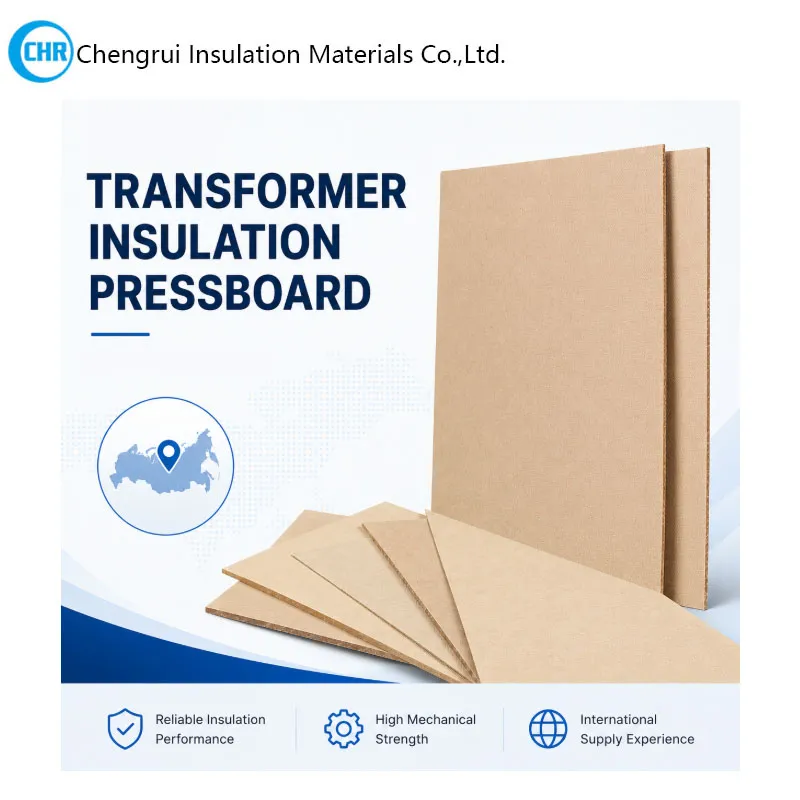
Material: High-density electrical insulation pressboard
Application: Transformer barriers, spacers and machined insulation parts
Supply form: Full sheets in 1mm 2mm 3mm 4mm etc
Destination: Russia
Service: Specification confirmation, sample preparation and export packing
Why the First Order Included Several Thicknesses
The customer did not want to qualify the material for only one component.
Its workshop produced different insulation parts, so the first commercial order covered several frequently used thicknesses. This allowed the pressboard to be evaluated across more than one design and gave the purchasing team a clearer basis for future inventory planning.
The sheets were prepared according to the confirmed dimensions and grouped by thickness. Before packing, Chengrui checked the surface, edges, dimensions, flatness and package identification.
Instead of combining everything under one general label, the different specifications were marked separately. This made receiving inspection easier and allowed the warehouse team to place each thickness into the correct stock area immediately after delivery.
Packing Was Treated as Part of the Product
Pressboard can lose value before it reaches the customer if it absorbs moisture, develops bent corners or shifts inside the package.
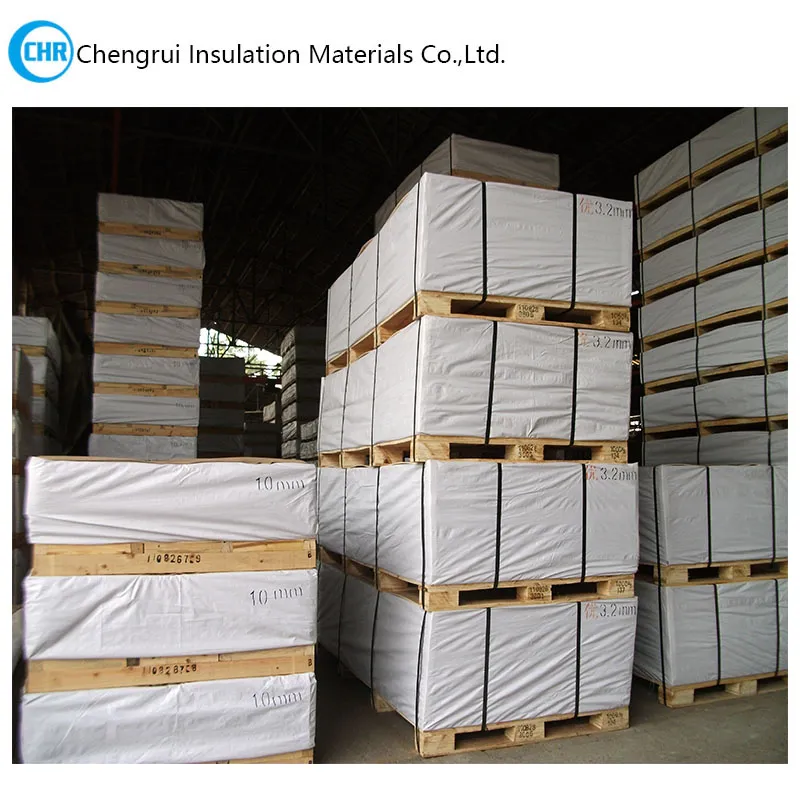
For this shipment, the sheets were stacked evenly and protected with moisture-resistant wrapping. Rigid boards were added above and below the stack to help maintain flatness, while the complete package was secured on an export pallet.
Particular attention was given to the corners and edges because these areas are most likely to be damaged during forklift handling and long-distance transportation.
The packaging also allowed the customer to identify the material without opening every stack, reducing unnecessary exposure before production.
What the Customer Found After Delivery
Once the trial shipment arrived, the pressboard was introduced into normal workshop production.
The material was processed into barriers, support parts and other electrical insulation components. Its behavior during cutting and machining remained consistent with the earlier samples, which meant the customer did not need to make significant changes to its existing process.
The mixed-thickness order also helped the customer compare actual consumption across different projects. Instead of estimating future requirements from catalog specifications alone, the purchasing team could plan repeat quantities based on real workshop usage.
After the first production cycle, discussions moved toward regular pressboard supply and other materials used in the same transformer insulation system, including kraft paper, crepe paper, oil duct strips and densified laminated wood.
More Than a Material Comparison
This project showed that qualifying transformer pressboard is not simply a matter of checking a thickness value on a technical data sheet.
The material must also cut cleanly, remain dimensionally stable and arrive in a condition suitable for immediate processing. For manufacturers using several component designs, repeatability across thicknesses is especially important.
The cooperation succeeded because the customer was able to evaluate the material gradually. Samples were tested first, followed by a mixed-thickness trial shipment and then workshop feedback under normal production conditions.
This reduced the risk of changing supply sources and gave both sides a clear technical basis for future orders.
Transformer Pressboard Supply from Chengrui
Chengrui supplies electrical insulation pressboard for transformers, power equipment and customized insulation components.
Standard sheets, multiple thicknesses and custom dimensions are available. Cutting and machining support can also be arranged for customers that require finished or semi-finished insulation parts.
Samples, technical information and moisture-resistant export packaging are available for international qualification projects.


Quick Quote