How to Choose Transformer Insulation Materials
Choosing appropriate transformer insulation materials is a fundamental part of transformer design and manufacturing. Insulation performance directly affects dielectric strength, thermal endurance, mechanical stability, and long-term service life. In practical transformer production, insulation materials should be selected according to their function within the insulation system rather than treated as interchangeable components.
Quick Answer
The most commonly used transformer insulation materials include kraft paper, diamond dotted paper, crepe paper, insulation pressboard and thermally upgraded paper.
In simple terms:
Kraft paper is used for conductor covering and basic interlayer insulation
Diamond dotted paper is used when winding layers need insulation plus bonding
Crepe paper is used for flexible wrapping on curved or irregular surfaces
Insulation pressboard is used for barriers, spacers, cylinders and structural insulation parts
Thermally upgraded paper is used when better thermal aging resistance is needed
The best way to choose transformer insulation materials is to start with the actual application inside the transformer, then match the material to the electrical, thermal and mechanical requirements.
What Are the Main Transformer Insulation Materials?
Most oil-immersed transformers use a combination of paper insulation and rigid board insulation. The exact material mix depends on transformer type, voltage level, thermal design, winding structure and manufacturing method.
The main transformer insulation materials commonly used in practice include:
Kraft insulation paper
Diamond dotted paper
Crepe paper
Insulation pressboard
Thermally upgraded paper
Each one plays a different role. Some materials are mainly used for winding insulation, while others are selected for structural support, flexible wrapping or improved thermal endurance.
1. Kraft Insulation Paper – The Foundation of Winding Insulation
Kraft insulation paper, also known as cable paper, is one of the most widely used insulation materials for transformers. It is primarily applied for conductor wrapping and interlayer insulation in transformer windings.
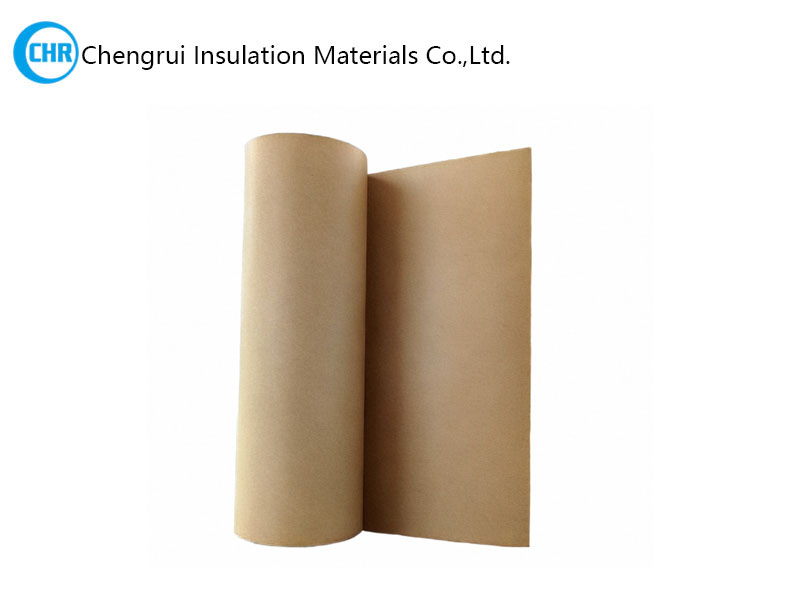
Its stable dielectric strength, oil compatibility, and uniform thickness make it a reliable base material in oil-immersed transformer designs. In most transformer insulation systems, kraft paper serves as the fundamental electrical barrier between conductors and layers.
2. Diamond Dotted Paper for Layer Bonding and Mechanical Stability
Diamond dotted paper (DDP) is commonly used as interlayer insulation in transformer windings. The thermosetting resin dots allow layers to bond during curing, which improves mechanical stability and reduces conductor movement under short-circuit conditions.
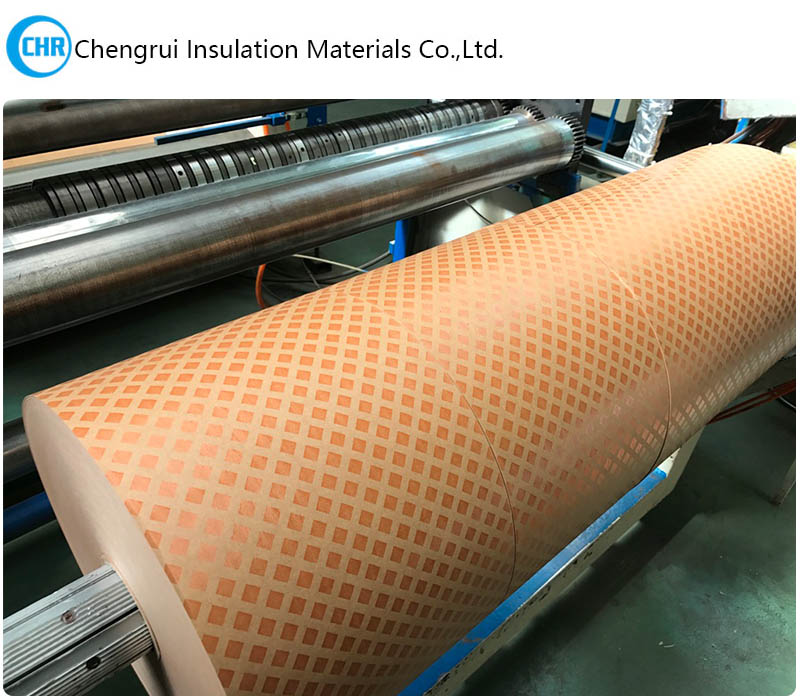
In modern transformer manufacturing, diamond dotted paper plays an important role in enhancing winding integrity while maintaining good dielectric performance. It is widely applied in both power and distribution transformers.
3. Crepe Paper for Flexible and Lead Insulation Applications
Crepe paper insulation is mainly used in areas requiring flexibility, such as lead insulation, corner insulation, and curved sections of transformer windings. Its stretchability allows it to adapt to complex geometries without tearing.
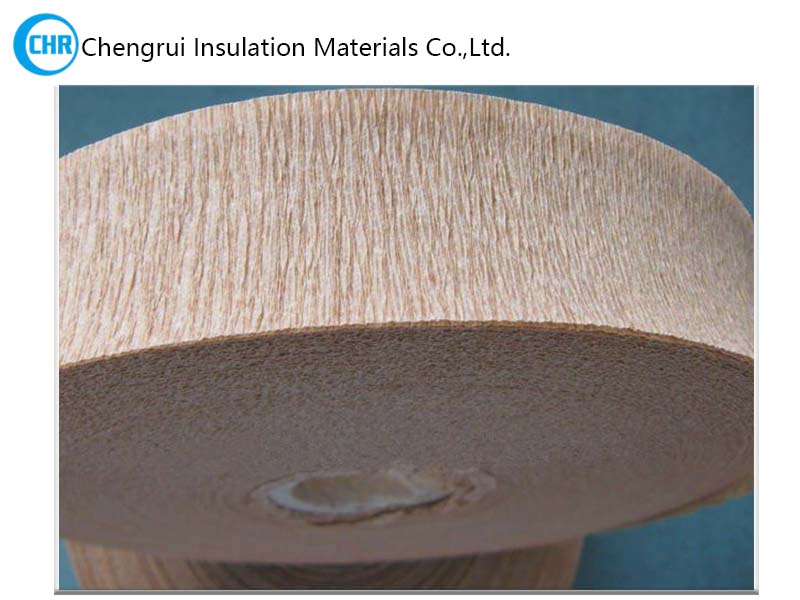
Crepe paper and crepe paper tubes are also commonly applied in oil-immersed transformers where good oil impregnation and mechanical adaptability are required.
4. Insulation Pressboard for Structural Components
Insulation pressboard is used for structural insulation components such as spacers, barriers, end rings, and support elements. Unlike paper-based winding insulation, pressboard provides higher mechanical strength and dimensional stability.
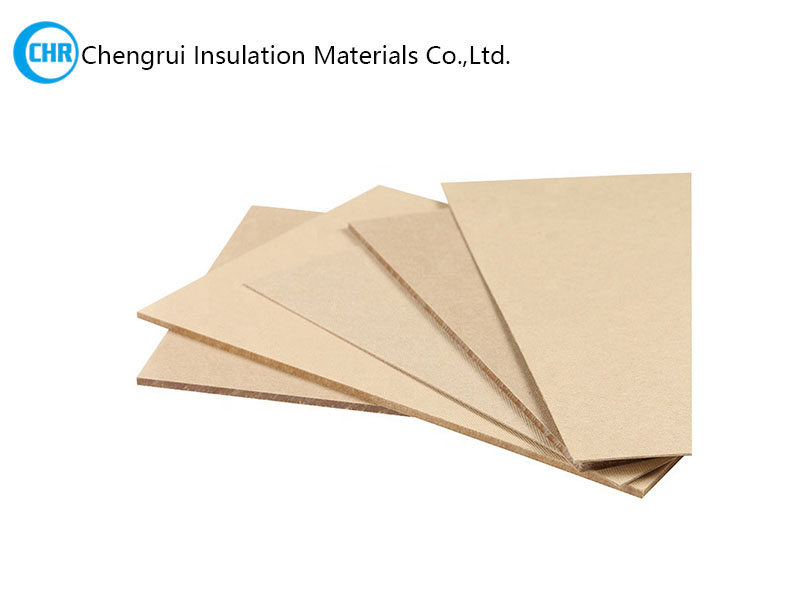
Proper selection of pressboard is essential to maintain electrical clearances and ensure long-term structural reliability inside the transformer.
5. Thermally Upgraded Paper for Higher Temperature Performance
Thermally upgraded paper(TUP) is used when the insulation system needs better resistance to thermal aging than standard kraft paper can provide.
Compared with ordinary kraft paper, its main benefit is improved performance under higher thermal stress. That makes it suitable for transformer designs where thermal endurance and long-term reliability are more demanding.
Practical Considerations When Selecting Transformer Insulation Materials
When choosing insulation materials for transformers, manufacturers should consider operating voltage, thermal class, mechanical stress, oil compatibility, and long-term aging performance. A reliable transformer insulation materials supplier should provide consistent material quality, controlled tolerances, and stable supply for bulk production.
For a complete overview of insulation solutions, visit our Transformer Insulation Materials page.
Common Mistakes When Choosing Transformer Insulation Materials
Mistake 1: Treating all transformer papers as interchangeable
Kraft paper, diamond dotted paper and crepe paper are not used for the same job.
Mistake 2: Choosing only by price
The cheapest material may not deliver the right performance in the transformer.
Mistake 3: Ignoring mechanical function
Some insulation parts also need rigidity and support, not just dielectric separation.
Mistake 4: Ignoring thermal demand
Standard paper may not be enough if the transformer requires better thermal aging resistance.
Mistake 5: Choosing by habit instead of application
The right material should be selected according to the transformer part and working condition.
FAQs About Transformer Insulation Materials
Q:What insulation materials are commonly used in transformers?
A:Kraft paper, diamond dotted paper, crepe paper, insulation pressboard, and thermally upgraded paper form the core insulation system in most transformer designs.
Q:Why is diamond dotted paper used in transformer windings?
A:It provides interlayer insulation while improving mechanical bonding and winding stability during operation.
Q:What is insulation pressboard used for?
A: It is used for rigid insulation parts such as barriers, spacers, cylinders and support components.
Q:When should thermally upgraded paper be chosen?
A:It is usually chosen when the transformer requires better resistance to thermal aging and improved thermal endurance.
CTA
Looking for reliable transformer insulation material for power and distribution transformer production?
We supply kraft insulation paper, diamond dotted paper, crepe paper, insulation pressboard and thermally upgraded paper for bulk transformer manufacturing.
Contact us for product details, thickness options and quotation support.


Quick Quote